Why the choice of bedding matters
Bedding is not merely a decorative element in the bedroom. It directly affects comfort, hygiene, and the longevity of the textiles. In professional settings such as hotels and apartments, bedding must meet several key criteria: durability and resistance to frequent washing, retention of color and fabric structure, a pleasant feel on the skin, and a presentable appearance.
For that reason, choosing between damask, sateen, and percale is not only a matter of taste but also of function. The very same bedroom can leave a completely different impression depending on whether the bedding looks lustrous and silky, matte and crisp, or subtly patterned. The weave and finishing also influence how much the fabric creases, how it behaves after washing, how quickly it wicks moisture, and how it feels on the skin throughout the seasons.
In hospitality, bedding forms part of the overall experience. Guests may not know the weave by name, yet they will notice differences in softness, breathability, and that unmistakable freshly made feel. At home, bedding is equally important because it supports thermoregulation and comfort during sleep and, over time, affects the value of your investment.
What sets damask, sateen, and percale apart
Although damask, sateen, and percale are most often made of cotton, the difference does not lie in the fiber but in the weave. The weaving technique determines the surface appearance, softness and texture, breathability, durability, and care requirements. This is why two sets of bedding made from 100% cotton can look and feel completely different.
Put simply, percale is a plain weave that delivers a matte, crisp finish. Sateen is a weave that emphasizes smoothness and a gentle sheen. Damask uses a combination of different interlacings to create a pattern in the fabric structure itself. It is important to understand that the sheen or the pattern does not come from a coating or a print but from the way the yarns interlace.
In practice, percale will often be perceived as cooler and crisper, sateen as warmer and softer, and damask as more elegant and professional. Of course, thread density, yarn quality, and finishing all play a role, but the weave is the fundamental difference that shapes the user experience.
Damask: timeless elegance and durability
Damask is a traditional weaving technique that forms discreet, embossed-like patterns in the very structure of the fabric. The motifs are not printed. They are created by changes in the weave, which give bedding its distinctive, luxurious character. You will often recognize it by subtle stripes, geometric motifs, or classic ornamental designs that reveal themselves at certain angles of light.
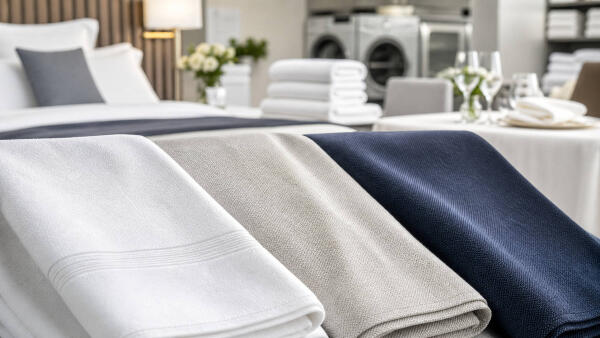
In higher category hotels, damask is a frequent choice because it combines refined aesthetics with durability. This bedding looks immaculate and upscale, while withstanding a high number of wash cycles. Damask is commonly associated with white hotel bedding, although it is available in other colors as well. White has proven the most practical due to easier care and its pristine look.
Damask is usually woven from quality cotton. In professional variants, fabrics are engineered for intensive washing and drying. Its structure is firm enough to retain its shape and at the same time smooth enough to feel comfortable on the skin. The woven pattern gives added depth without the need for visually busy designs.
Advantages of damask bedding
- a sophisticated, professional look with a discreet woven pattern
- long service life and high resistance to abrasion
- excellent shape retention and dimensional stability through repeated washing
- a neat, polished finish after ironing or professional finishing
When to choose damask
Damask is ideal for upscale hotels and apartments, showcase bedrooms, and properties that wish to convey a sense of luxury without excessive decoration. It is also an excellent choice when you want white bedding with a refined look, as the damask pattern is particularly striking in white.
Sateen: softness and a luxurious sheen
Satin refers to a weave rather than a fiber. In bedding, the standard is cotton sateen, which combines the natural benefits of cotton with an elegant appearance. The surface of sateen is even and smooth to the touch, with a gentle, refined sheen, especially in higher quality constructions.
Sateen bedding is often associated with luxury and comfort because it feels very soft and pleasant to sleep in. Many describe it as silky, even though it is cotton. Due to its structure, sateen often feels warmer than percale, while in air conditioned rooms it can still provide a lightly cooling sensation on the skin.
In practice, cotton sateen is a popular choice in premium rooms and suites, as well as in homes where users want maximum softness. It is important to note that sateen can be more sensitive to mechanical friction than percale, so in professional environments it is advisable to choose variants designed for intensive use.
Advantages of sateen bedding
- exceptional softness and comfort on the skin
- an elegant, gently lustrous appearance
- a pleasant sleeping experience, especially for those who prefer smooth fabrics
- a refined atmosphere in the bedroom without additional décor
When to choose sateen
Sateen is an excellent choice for luxury bedrooms, premium accommodation units, and anyone who prefers very soft bedding. It is also frequently chosen for the cooler months, as it tends to feel cozier and warmer, although this depends on weave density and fabric weight.
Percale: crisp freshness and a natural feel
Percale is a tightly woven plain weave with a matte surface and a fresh, lightly firm hand. It is often described as bedding with a hotel-like sense of crisp cleanliness and freshness. If you love slipping into a crisp, freshly laundered bed, you are most likely thinking of a percale experience.
Percale is extremely popular in hospitality because it withstands frequent washing, is easy to care for, and maintains a tidy appearance. In warmer climates or during summer, percale is often the best choice thanks to its high breathability and the way it does not cling to the skin.
Another advantage of percale is its stability. The fabric is strong and even, and less prone to developing shiny areas or surface changes. Over time, quality percale softens while retaining its signature freshness.
Advantages of percale bedding
- outstanding breathability and a fresh feel
- a matte, tidy look that suits minimalist interiors
- very high resistance to frequent washing and intensive use
- straightforward care and reliable performance over time
When to choose percale
Percale is ideal for hotels and apartments with high guest turnover, for the summer season, and for anyone who prefers a lightly firm and crisp feel. In practice, percale is often the most cost effective choice when you want longevity and easy care without compromising comfort.
Comparing damask, sateen, and percale
To make choosing easier, it is helpful to compare these three weaves across key criteria. Personal impressions will always vary, although the following guidelines hold true in most cases:
- Appearance: Damask features discreet woven patterns and reads as formal. Sateen has a smooth sheen and conveys luxury. Percale is matte and understated.
- Handfeel: Damask is smooth yet more structured. Sateen is the softest and most silky. Percale feels crisp and lightly firm.
- Breathability: Percale is the most breathable. Sateen is very good. Damask ranges from good to very good depending on density.
- Laundering resilience: Damask and percale are excellent for intensive washing. Sateen requires careful selection of quality and appropriate care protocols.
- Overall impression: Damask signals hotel luxury. Sateen suggests plush premium comfort. Percale communicates fresh cleanliness.
Which bedding is best for a hotel
In hospitality, the choice of bedding depends on the property category, guest profile, and intensity of use. There is no single solution for every case, although some guidelines are highly practical.
Damask is a frequent choice in higher category hotels because it looks luxurious and formal, especially in white. It elevates the overall impression of the room without the need for additional accents and remains durable.
Percale is excellent for properties with many wash cycles and quick guest turnover. It provides a tidy look, breathability, and very good resistance to intensive care.
Sateen is used when the emphasis is on softness and a premium feel, often in suites or higher priced rooms. In that case, it is advisable to choose professional quality sateen and align washing and drying protocols to preserve the surface.
Many hotels combine different types of bedding depending on room category or season. For example, percale for the summer season or standard rooms, and sateen or damask for premium categories.
Which bedding is best for the home
At home, the choice of bedding often depends on personal preferences and sleeping habits. If you want bedding with a refined, hotel-like look, damask is an excellent choice. If your priority is maximum softness, sateen is the usual favorite. If you value freshness and breathability, percale is highly rewarding.
Also consider room temperature. In warmer rooms or in summer, percale often performs best. In cooler conditions, sateen may feel more comfortable. Damask sits in the middle and balances elegance with functionality.
How to recognize quality bedding
Regardless of the weave, bedding quality is determined by other factors as well. These include thread density, cotton quality, finishing, colorfastness, and dimensional stability after washing.
Quality bedding has an even weave, no irregularities, and feels pleasant to the touch without rough spots. In professional settings it is especially important that the fabric withstands repeated washing, drying, and pressing with minimal shrinkage and loss of shape. For that reason, professional grade textiles often prove more cost effective over time than cheaper variants, even for home use.
Care tips for damask, sateen, and percale
To preserve the quality of your bedding for as long as possible, proper care is essential. Good maintenance extends service life, maintains a pleasant feel, and reduces replacement costs.
- Wash bedding at the recommended temperatures and choose a program suitable for cotton.
- Use the correct amount of detergent to avoid buildup in the fibers.
- Avoid aggressive bleaching agents unless truly necessary and then only in the recommended dose.
- Do not overload the washing machine so the fabric has enough space for rinsing.
- Dry at moderate temperatures and, where possible, avoid excessive drying time.
Sateen benefits most from a gentler approach. Choose lower drying temperatures and avoid strong mechanical friction. Percale and damask are generally more tolerant, although proper care will extend their lifespan as well.
Conclusion
Damask, sateen, and percale are the three most common bedding weaves, and each offers distinct advantages. Damask delivers timeless elegance and durability. Sateen provides softness and a luxurious sheen. Percale offers crisp freshness and resilience.
There is no universally best bedding. The right choice depends on purpose, frequency of use, and personal preferences. When you consider fabric quality and proper care, each of these weaves can deliver long lasting comfort and visual appeal, whether you are equipping a hotel, an apartment, or your own home.